

Welcome message from the president
|
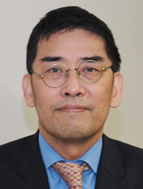
The 28th Annual Meeting of Japanese Society for Neuroscience in Anesthesiology and Critical Care President Kazuhiro Ishida Director, Department of Anesthesiology Kurashiki Central Hospital |
 |
Dear colleagues,
The 28th Annual Meeting of the Japanese Society for Neuroscience in Anesthesiology and Critical Care (JSNACC) will take place at Kurashiki Central Hospital Preventive Healthcare Plaza on Saturday, July 13 and Sunday, July 14, 2024.
I joined the Department of Anesthesiology, Yamaguchi University Graduate School of Medicine after graduating from Yamaguchi University. It is a great honor for me to lead this conference, but I also feel a great deal of pressure.
The JSNACC was founded in 1997 as the Japanese Society for Neuroscience in Anesthesiology and became an academic society in 2014. Therefore, the theme of this year’s meeting is “A Quarter of a Century of the JSNACC” as this is the 28th conference and 27 years have passed since the founding of the society. Over the past quarter century, the expansion of surgical indications with the advent of an elderly and super-elderly society and the development of minimally invasive surgical techniques have led to a situation in which critical care and surgical anesthesia must deal with patients at high risk for neurological disorders. Therefore, the importance of anesthesiology and critical care is expected to increase in the future.
Although a quarter of a century has passed, the limitation time for cerebral circulatory arrest and the need for early resumption of circulation after cardiac arrest have not changed, and the efficacy of post-resuscitation therapeutic hypothermia is becoming less clear. The incidence of brain and spinal cord injury associated with cardiovascular surgery does not appear to be significantly reduced by the expansion of surgical indications to include elderly and very elderly patients. On the other hand, the relationship between rehabilitation and exercise and brain function has attracted attention, and some reports suggest that rehabilitation and exercise are effective in improving outcomes, including brain dysfunction in the perioperative period. I hope to explore the future of anesthesiology and critical care by reviewing areas that have remained constant and areas that have improved over the past quarter century. The JSNACC will be the sole organizer of the conference, but I plan to create an English-language website and encourage overseas researchers to send us their abstracts.
I considered holding the conference near the railway station, but decided to hold it at a facility of Kurashiki Central Hospital, which celebrated its 100th anniversary this year. On Saturday, the conference is scheduled to start around 10:00 a.m. after an early morning meeting. On Sunday, it is scheduled to end in the morning to allow time for sightseeing in Kurashiki. I anticipate that the outbreak of the infectious disease of concern will be nearing an end by then, so I plan to hold the on-site conference alone. If time permits, I would also like to give a tour of the operating room. The Bikan Historical Quarter and the Ohara Museum of Art are located near the conference venue. We look forward to welcoming you to Kurashiki next summer. I wish you good health and continued success in your endeavors.
Sincerely,
Kazuyoshi Ishida, MD, PhD
Department of Anesthesiology
Kurashiki Central Hospital
The 28th Annual Meeting of the Japanese Society for Neuroscience in Anesthesiology and Critical Care (JSNACC) will take place at Kurashiki Central Hospital Preventive Healthcare Plaza on Saturday, July 13 and Sunday, July 14, 2024.
I joined the Department of Anesthesiology, Yamaguchi University Graduate School of Medicine after graduating from Yamaguchi University. It is a great honor for me to lead this conference, but I also feel a great deal of pressure.
The JSNACC was founded in 1997 as the Japanese Society for Neuroscience in Anesthesiology and became an academic society in 2014. Therefore, the theme of this year’s meeting is “A Quarter of a Century of the JSNACC” as this is the 28th conference and 27 years have passed since the founding of the society. Over the past quarter century, the expansion of surgical indications with the advent of an elderly and super-elderly society and the development of minimally invasive surgical techniques have led to a situation in which critical care and surgical anesthesia must deal with patients at high risk for neurological disorders. Therefore, the importance of anesthesiology and critical care is expected to increase in the future.
Although a quarter of a century has passed, the limitation time for cerebral circulatory arrest and the need for early resumption of circulation after cardiac arrest have not changed, and the efficacy of post-resuscitation therapeutic hypothermia is becoming less clear. The incidence of brain and spinal cord injury associated with cardiovascular surgery does not appear to be significantly reduced by the expansion of surgical indications to include elderly and very elderly patients. On the other hand, the relationship between rehabilitation and exercise and brain function has attracted attention, and some reports suggest that rehabilitation and exercise are effective in improving outcomes, including brain dysfunction in the perioperative period. I hope to explore the future of anesthesiology and critical care by reviewing areas that have remained constant and areas that have improved over the past quarter century. The JSNACC will be the sole organizer of the conference, but I plan to create an English-language website and encourage overseas researchers to send us their abstracts.
I considered holding the conference near the railway station, but decided to hold it at a facility of Kurashiki Central Hospital, which celebrated its 100th anniversary this year. On Saturday, the conference is scheduled to start around 10:00 a.m. after an early morning meeting. On Sunday, it is scheduled to end in the morning to allow time for sightseeing in Kurashiki. I anticipate that the outbreak of the infectious disease of concern will be nearing an end by then, so I plan to hold the on-site conference alone. If time permits, I would also like to give a tour of the operating room. The Bikan Historical Quarter and the Ohara Museum of Art are located near the conference venue. We look forward to welcoming you to Kurashiki next summer. I wish you good health and continued success in your endeavors.
Sincerely,
Kazuyoshi Ishida, MD, PhD
Department of Anesthesiology
Kurashiki Central Hospital
Society office
Department of Anesthesiology
Kurashiki Central Hospital
Chief of the office: Mr. Yasutaka Shinjo
1-1-1 Miwa, Kurashiki, Okayama,
710-8602 JAPAN
TEL:+81-86-422-0210 FAX:+81-86-421-3424
Department of Anesthesiology
Kurashiki Central Hospital
Chief of the office: Mr. Yasutaka Shinjo
1-1-1 Miwa, Kurashiki, Okayama,
710-8602 JAPAN
TEL:+81-86-422-0210 FAX:+81-86-421-3424
Conference office
KYODOPLUS CORPORATION
2346-1 Senoo, Minami-ku, Okayama
701-0205, JAPAN
TEL:+81-86-250-7681 FAX:+81-86-250-7682
E-mail: jsnacc2024@kwcs.jp
KYODOPLUS CORPORATION
2346-1 Senoo, Minami-ku, Okayama
701-0205, JAPAN
TEL:+81-86-250-7681 FAX:+81-86-250-7682
E-mail: jsnacc2024@kwcs.jp
Copyright ©The 28th Annual Meeting of Japanese Society for Neuroscience in Anesthesiology and Critical Care. All Rights Reserved.